

Environmental technologies for the future
Environmental technologies for the future
The INZIN Institute at IFAT in Munich | 30 May to 3 June 2022
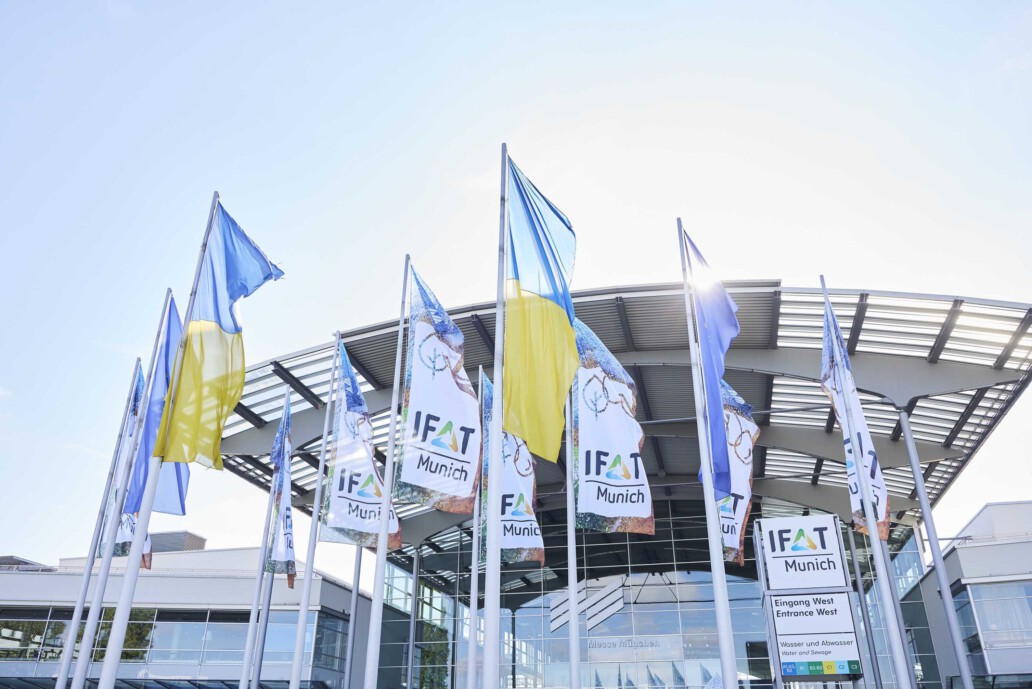
IFAT, the world’s leading trade fair for environmental technologies, showcases technologies and solutions for an environmentally and climate-friendly future. INZIN was on site with numerous activities as part of its work with the Competence Network Environmental Economy.NRW (KNUW). The KNUW, which exhibited at the joint stand of the German Waste Management Association (DGAW) in Hall 6, presented itself at IFAT with various contributions at the stand and in the trade fair’s event programme. The focus was on companies, initiatives, associations and research areas from North Rhine-Westphalia. (Press release from MULNV NRW).
According to the final report, IFAT Munich attracted a total of 2,984 exhibitors from 59 countries and around 119,000 visitors from 155 countries (final report by Messe München).

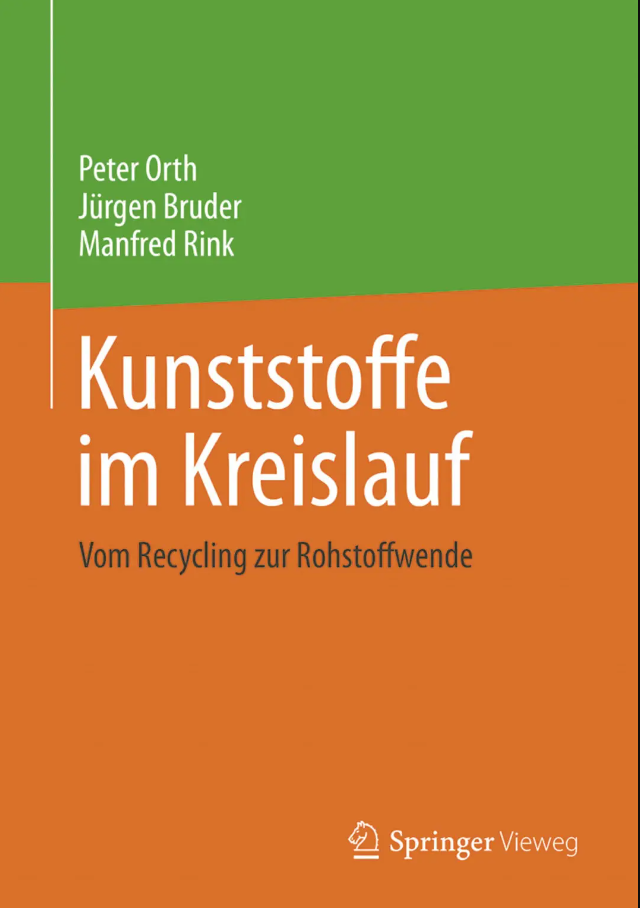
Kunststoffe im Kreislauf: Vom Recycling zur Rohstoffwende
Month: May 2022
Weitere Informationen finden Sie > hier
by Peter Orth (author), Jürgen Bruder (author), Manfred Rink (author) with an introduction by Professor Dr. Martin Faulstich
The book will be published in August 2022 and will be available in shops from then on.
The authors introduce readers to the complex world of the plastics industry, think through its circularity to its logical conclusion, and show what a holistic and integrative circular economy strategy could look like
(Prof. Martin Stuchtey). A greenhouse gas-neutral and resource-efficient society is based on two essential pillars: renewable energy sources and recycled raw materials – the energy transition needs a raw materials transition (Prof. Martin Faulstich). The life cycle perspective on plastics enables a win-win situation: circular raw materials replace fossil raw materials, which no longer end up in the environment. We must consistently invest in circular raw materials instead of fossil raw materials (Prof. André Bardow). The vision of circular value creation can only be realised if plastic cycles are systematically and consistently closed. This requires a profound industrial transformation towards a circular plastics economy
(Ralph Appel).
Readers are provided with information for estimating production volumes, market sizes, emissions and waste quantities. The systematic examination of technical, economic and ecological aspects forms the basis for analyses and for implementation in business and society. With this book, the authors aim to provide those involved or interested in the plastics recycling industry with an overview of this rapidly developing field, to address the key challenges facing the plastics industry, to develop the structure of a circular economy in contrast to the linear economy that ends in waste, to provide figures, data and facts for the work, and to clarify the terminology.
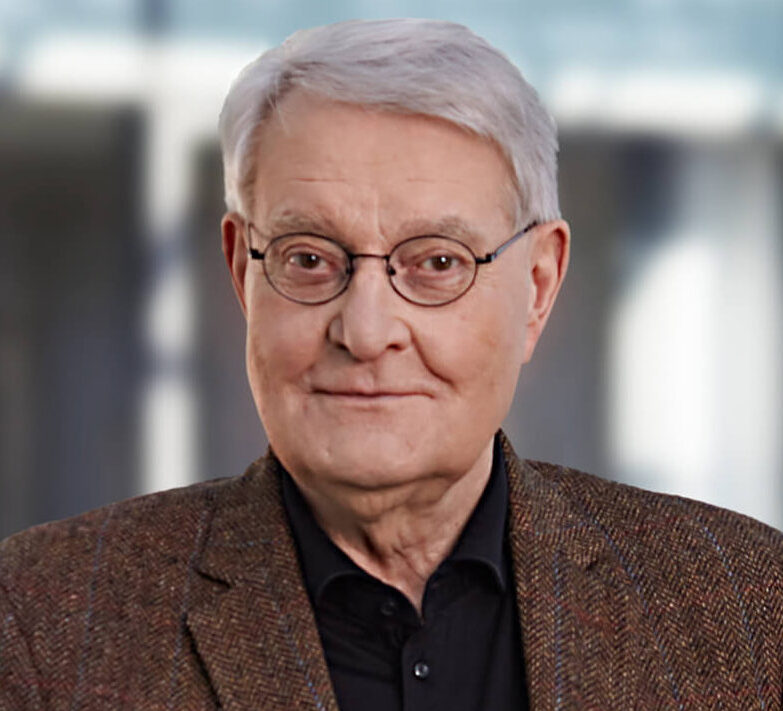
Dr. Ulrich Teich
Month: May 2022
Senior Consultant
E-mail: ulrich.teich(at)inzin.de
Vita
Dr. Ulrich Teich has been a senior consultant for the INZIN Institute since July 2022 and supports the team with his many years of legal experience in contractual matters.
Previously, he worked as a lawyer in the fields of employment law, immigration of skilled workers, environmental law and renewable energies. Ulrich Teich is also a member of the German Association for Waste Management’s (DGAW) working group on fundamental issues of resource management.