

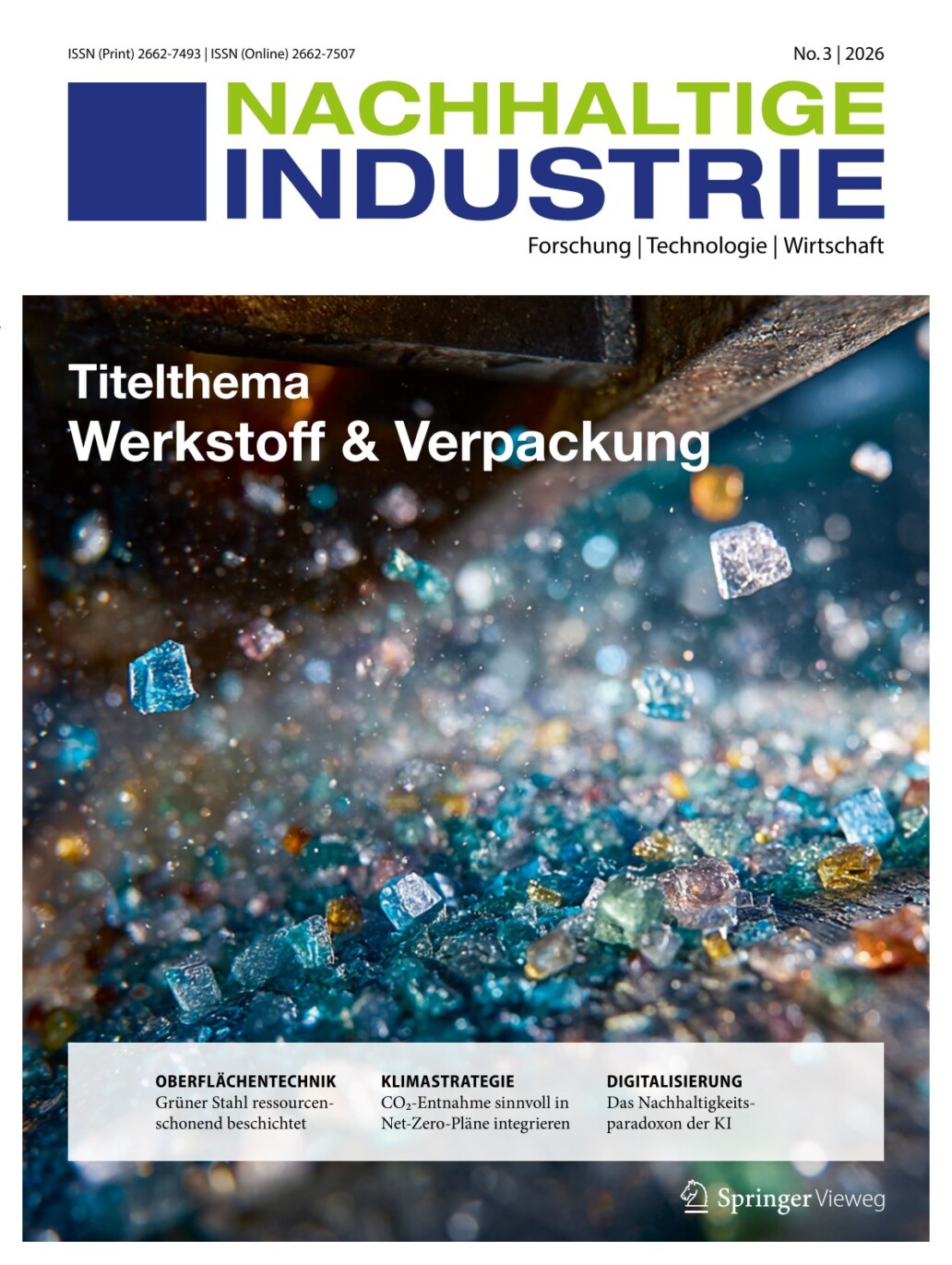

Nachhaltige Industrie 3/2026: Spotlight on Materials & Packaging
Month: October 2026
Plastic has revolutionised our everyday lives: lightweight, versatile, inexpensive. But the material also has its downsides, and the answer cannot lie in ever more recycling alone. This issue therefore asks a more fundamental question: How can the use of materials and packaging be made more efficient overall? After all, companies decide on materials, packaging and product design, and in doing so shape a product’s ecological footprint across its entire life cycle. The cover story shows how businesses are already rethinking their material flows, and that the transformation is well under way.
Two contributions from our institute have also been published in this issue.
“Autumn of Reforms”: Column by Prof. Faulstich
In his column, Prof. Dr. Martin Faulstich, Editor of Nachhaltige INdustrie, takes up the German federal government’s motto and asks a question that deserves to be asked more often: Why are growth and climate protection always demanded separately from one another? He looks at the current reform debate and points out that there is no shortage of ideas and recommendations. Read the column to find out which reforms he considers most urgent and what role he assigns to business.
Reusable Transport Packaging for Efficient Supply Chains
Our research associate Konstantin Saure turns to an area that is often overlooked: transport packaging. Transport packaging made of paper, cardboard and corrugated board alone accounts for around one fifth of all packaging waste in Germany. Can reusable systems offer an alternative here, and what does this mean for companies and their supply chains? The article examines examples from retail and industry and addresses three aspects: protection of goods, flow of goods and transparency in the supply chain. The article reveals which opportunities, but also which challenges, emerge.
Konstantin Saure is a scholarship holder and research associate at the INZIN Institute. As part of his doctorate, he researches resource strategies for cities in Germany.
Order the Issue
Curious? You can order the current issue as well as previous issues of Nachhaltige Industrie via our website: NI 2026_01 Kreislaufwirtschaft – Wege zur zirkulären Wertschöpfung – INZIN Institut. We wish you an inspiring read!
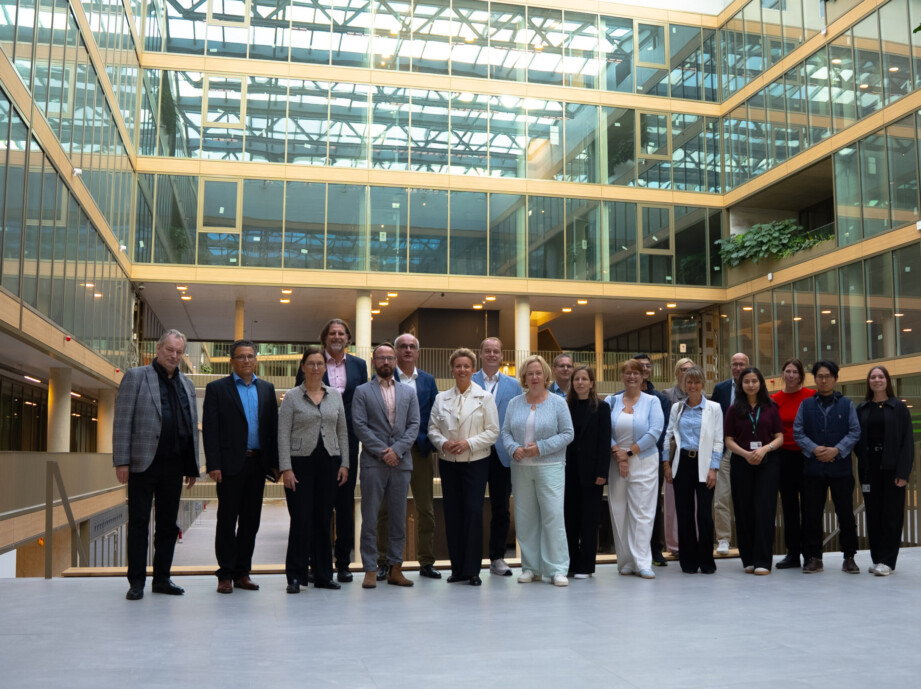
Minister Brandes at the EUREF Talent Campus Düsseldorf
Month: October 2026
A Campus as a Living Lab
The EUREF Talent Campus in Düsseldorf is regarded as a living lab for the energy transition. Science, industry, and politics exchange ideas here, and students work on real-world tasks from companies. This is exactly what the Minister wanted to see for herself. She began with a tour of the CO₂-neutral campus grounds. Her host was Karin Teichmann, Member of the Executive Board of EUREF AG. Prof. Martin Faulstich also took part in the visit.
Studying with a Practical Focus
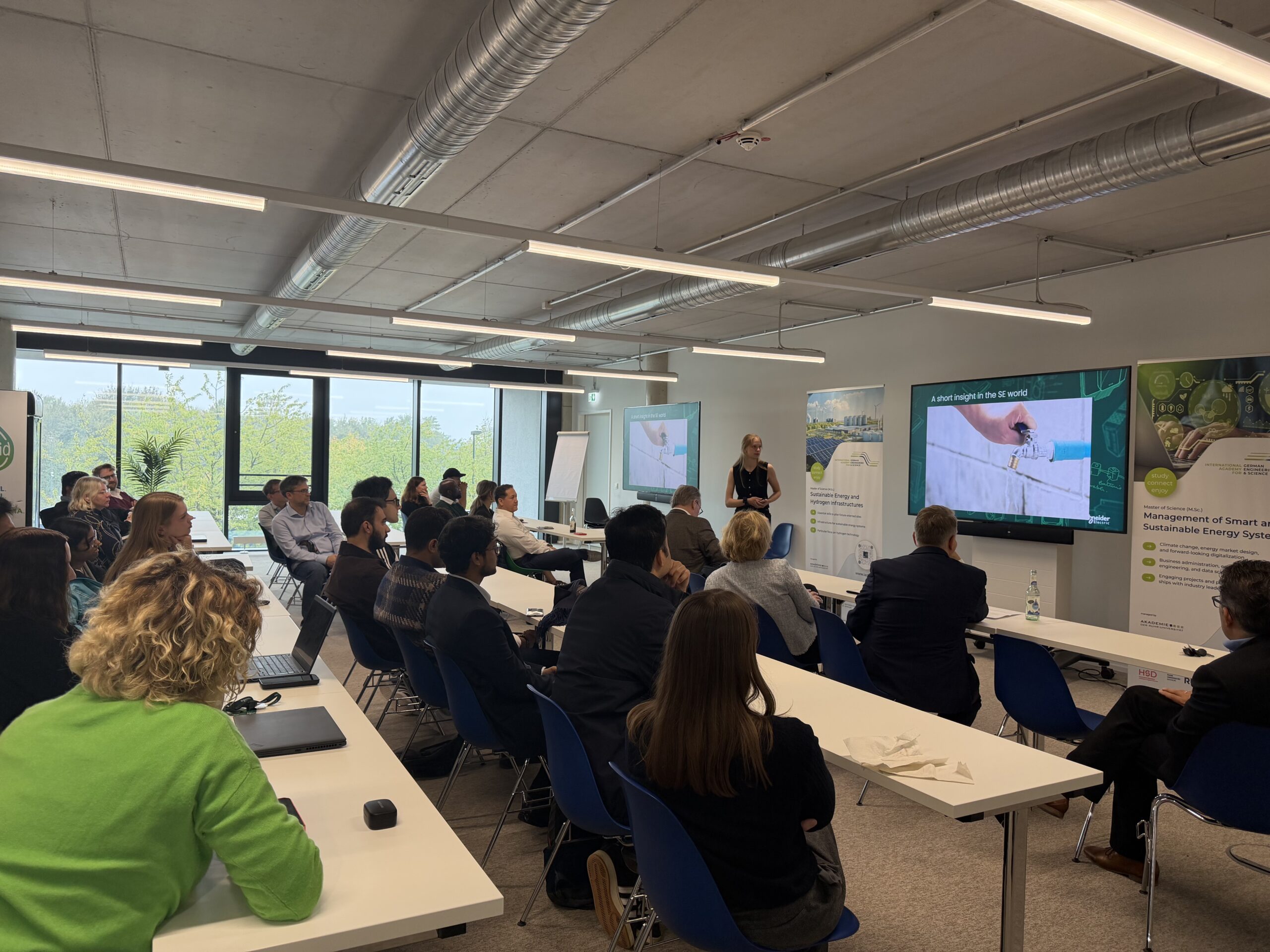
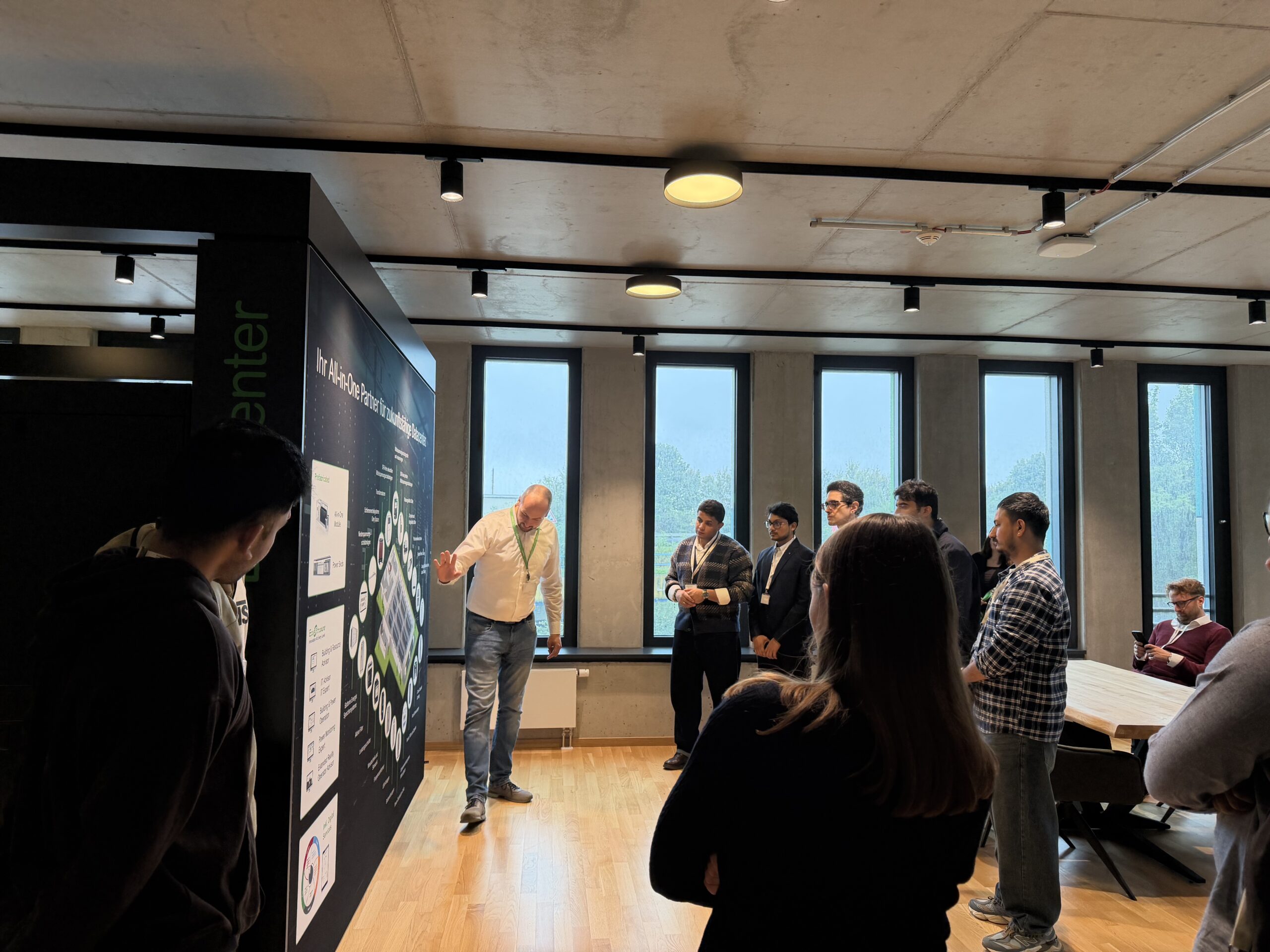
The English-language master’s programs are aimed at international students. They are organized by the International Academy for German Engineering & Science (IAGES). Participating institutions are the University of Duisburg-Essen, Ruhr University Bochum, TU Dortmund University, and Düsseldorf University of Applied Sciences. Two programs are already running, one on sustainable energy systems and one on energy and hydrogen infrastructures. Students take on projects with industry partners such as Schneider Electric and SPIE at an early stage.
Conversation with the Students
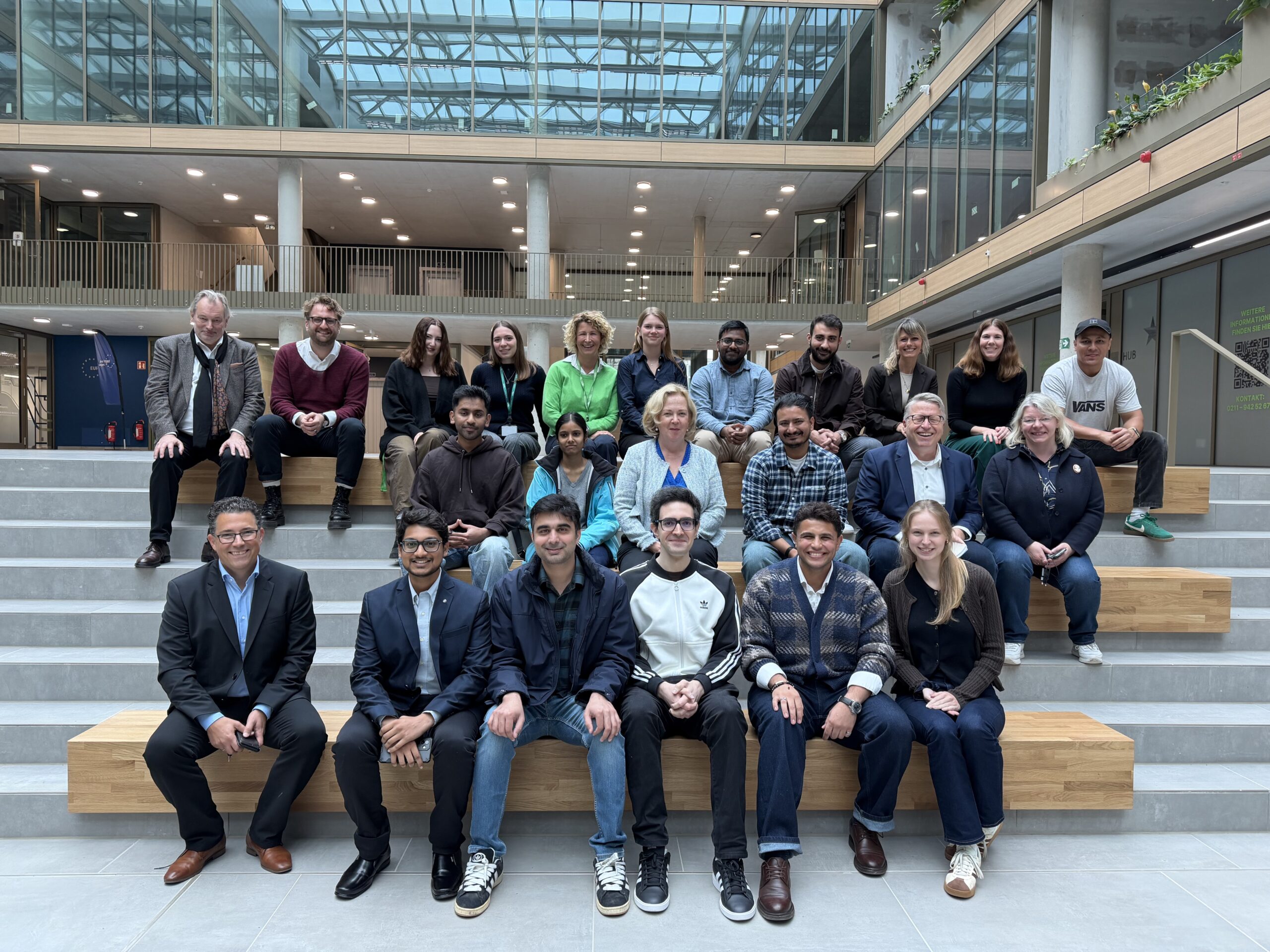
The conversation with the students was the highlight of the visit. Minkun Kim and Manahil Khan presented their practical projects. The Minister asked about their paths to Düsseldorf and was impressed by their international backgrounds and commitment. Stefan Deibel from SPIE also described how the company is training much-needed skilled professionals for the energy and mobility transitions on the campus.
A Growing Offer
For 2027, the University of Duisburg-Essen is planning a new master’s program in sustainable logistics (“Sustainable Logistic Solutions”), which Prof. Dr. Ellen Enkel presented. A further degree program on the sustainable planning, construction, and operation of buildings is also planned. In the long term, the campus is intended to establish itself as a meeting place for students, researchers, and companies.